Guidelines for Producing High-Quality Kurdish Olive Oil
(Good olive oil comes from a smart farmer who knows when to water, when to harvest, and when to process)
- Good water management: too much irrigation reduces the oil content inside the fruit, poor irrigation get worse quality
- Rainfed cultivation: produces smaller fruits with worse quality.
- When to irrigate: give good amount of water from flowering/fruit set till pit hardening, then it is possible to reduce water application until harvest.
- Harvesting time:
if you harvest early, you get higher-quality oil but lower quantities.
• if you harvest late, the quantity increases, but the quality decreases.
• the best time is when the olive color starts changing from green to purple. - How to harvest: collect the fruits gently and place them in plastic crates. Avoid using burlap or plastic bags, as they spoil the fruits and inhance fermentation.
- Time to process the olives: bring to the mill and process the olives within 24 hours after harvest to preserve flavor and aroma.
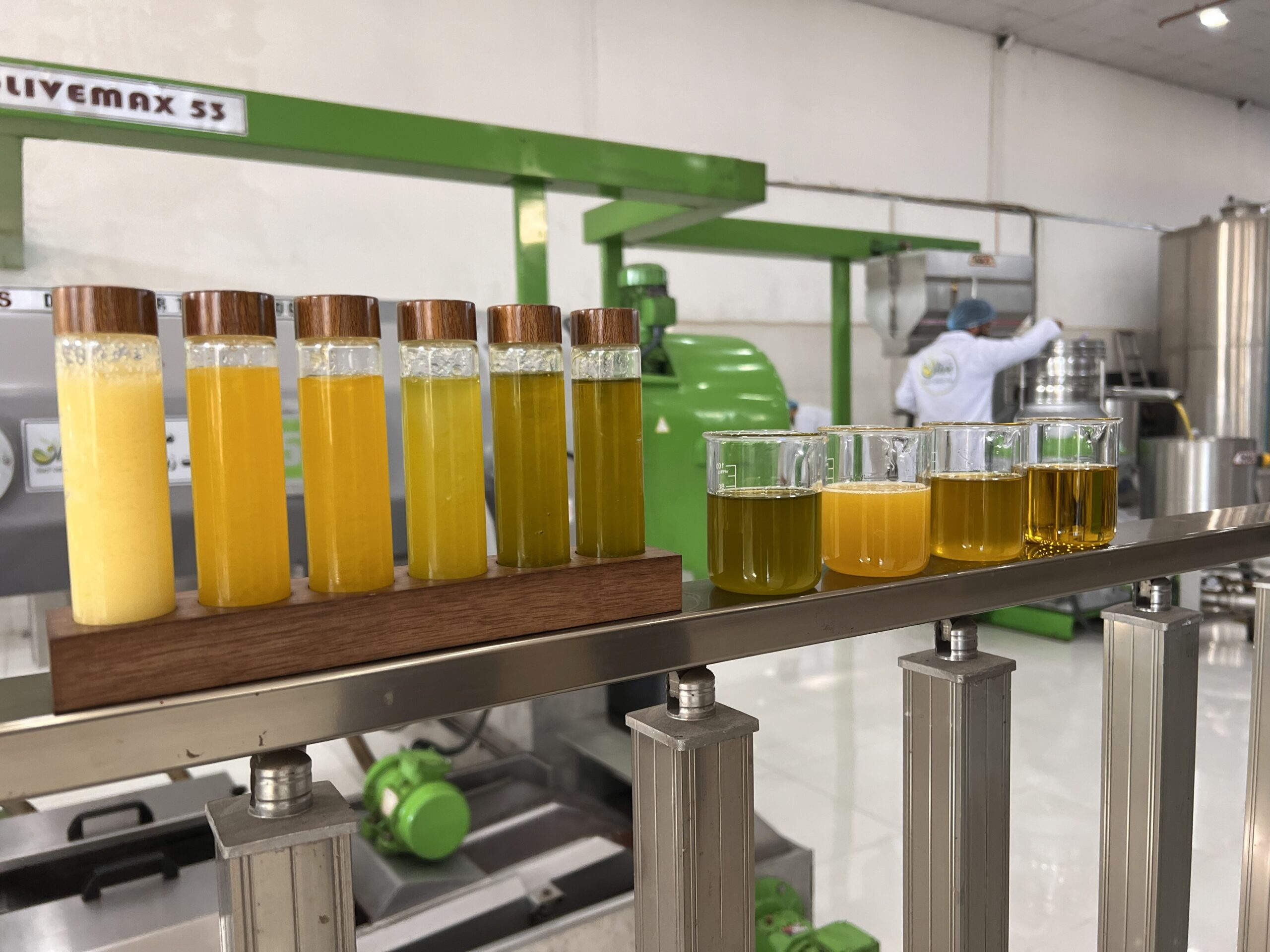
- Cold extraction: use low temperatures (<27°C) during extraction to maintain oil quality and valuable nutrients.
- Cleaning of the machines: always ensure that all the part of the mill are cleaned every day in order to maintain high olive oil quality.
The KORES Project, funded by the Italian Ministry of Foreign Affairs (AICS) and implemented by CIHEAM Bari in partnership with the Kurdistan Regional Government, supports sustainable rural development by strengthening the Kurdish olive oil value chain, enhancing farmers’ technical capacities, and promoting the production of high-quality, authentic olive oil in the Kurdistan Region of Iraq (KRI).